Monday, November 20, 2023

My old friends M36, M37 and M1

 Since I sold my house in 2020 (big regret), I haven't got any chance to look wonderful winter sky. Mainly because I am too close to Hwy 101, lots of pollution. Tonight, I escape to my Gilroy place to enjoy winter sky.

1. Open cluster M36, all B-type young start, looks cold as winter's night

2. Open cluster M37, B-type stars mixed with a dozen red giant, as ruby mixed with diamonds

3. Famous M1, supernova remnant, west of Tauris tau, little over 8 mag, can be easily seen. first time observed in 2013 used my 16" reflector

4. Orion nebula, so beautiful, you can beat it! 


Saturday, August 26, 2023

Study around Pegasus

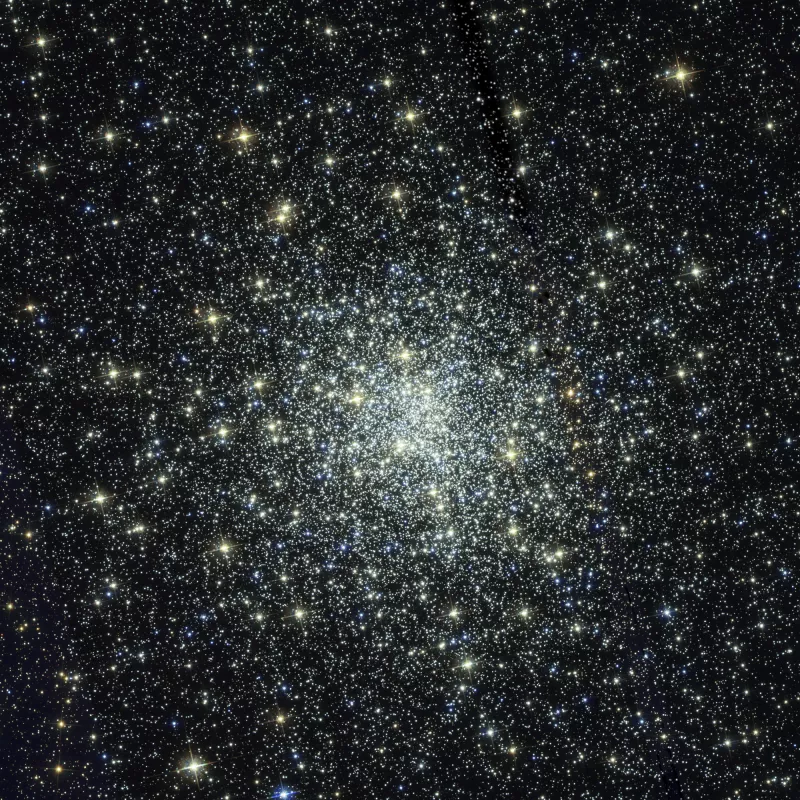
 1. M15 globular cluster drew my interest because it contains a planetary nebula Pease1. M15 is easy target, simply extends Baham & Enlif, however, Pease1 took quite an effort and finally I give up


2. NGC 7331 is relatively easy to find due to its small surface area, 9.5 magnitude, the real challenge is to spot other group members


Wednesday, July 26, 2023

Archer's bow meets with Ecliptic

 M8, M20, M21, M28, M22


It has been a long time since I observed the Sagittarius area at Dunford. Today the teapot is still behind my neighbor's building until about 10 o'clock.

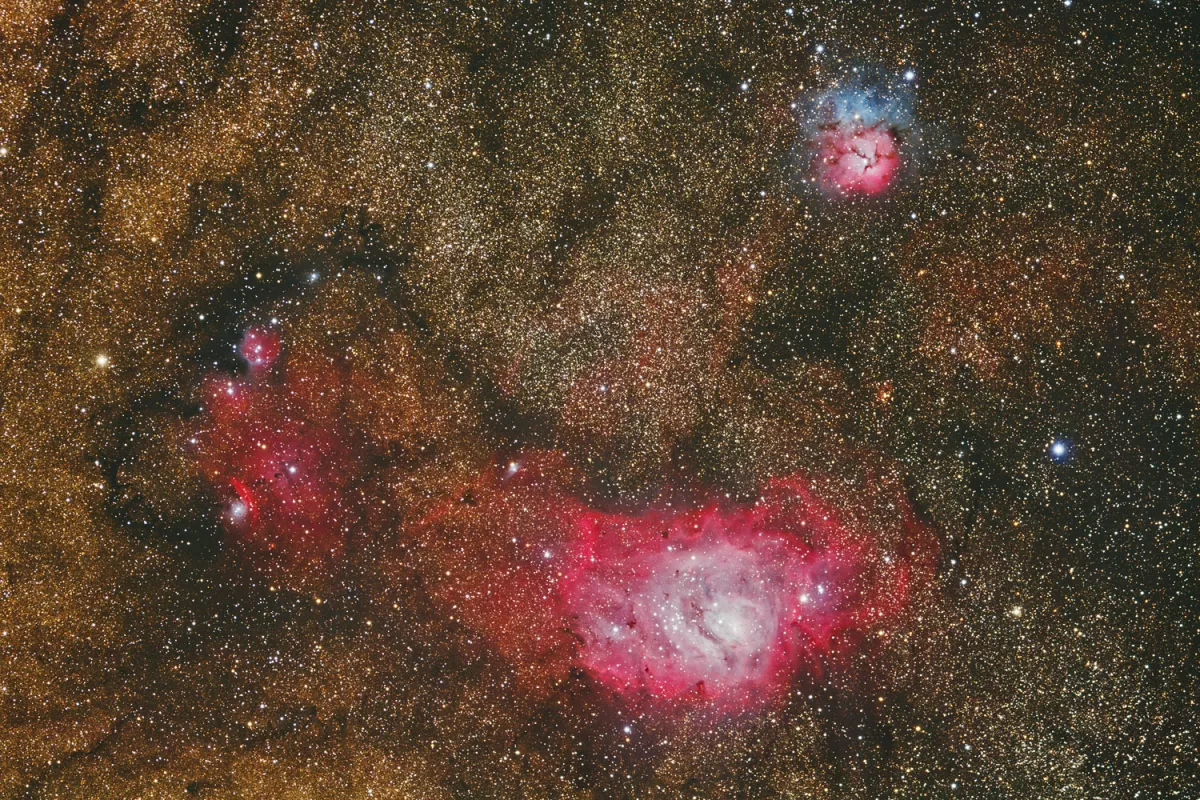
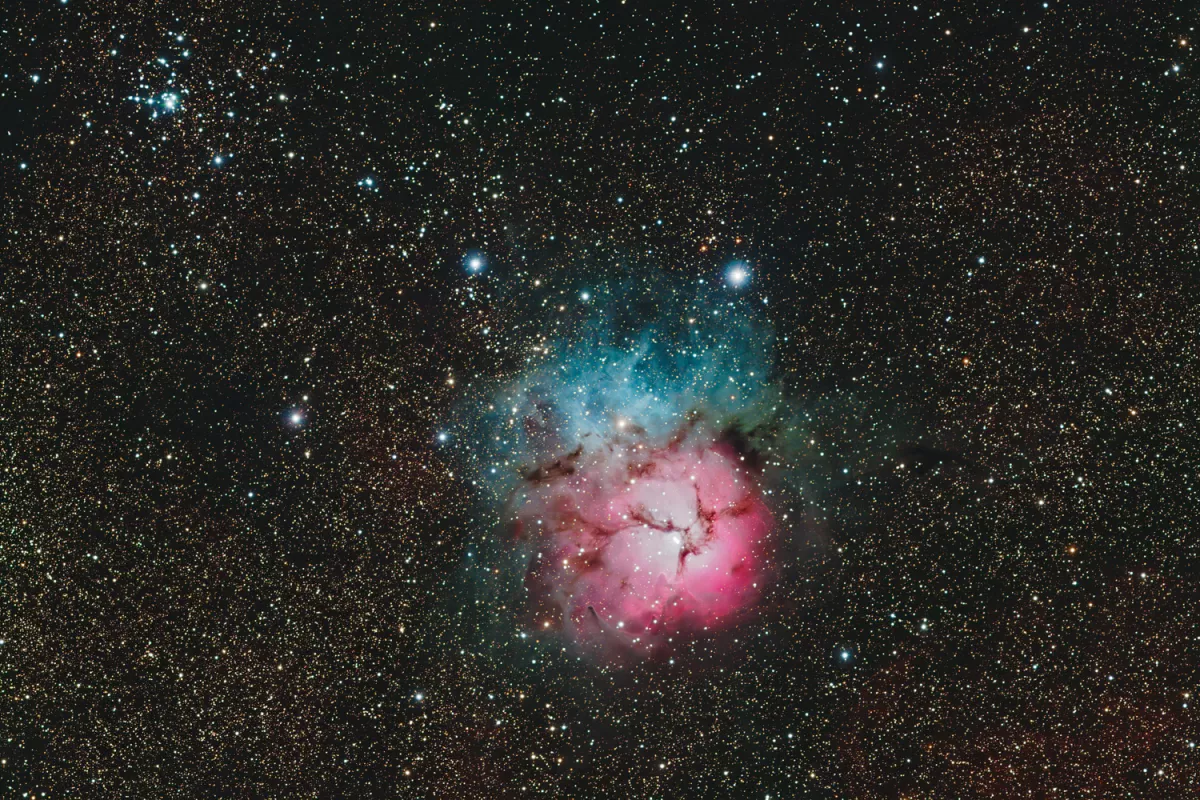
My first target is the long coveted Lagoon nebula, M8, which is roughly equidistance as opposite of Sigma to Lambda. I saw apparent nebulosity around the area about half a degree with open cluster NGC 6530 on the side. Going northwest about 1.5 degrees, Trifid nebula is an easy target, 

Continue going north is the open cluster M21, 


The next area of interest is around Lambda, 0.8 degrees northwest is the M28, 


Going northeast until meet the line extend Tau & Sigma, the magnificent M22 locates. It overwhelms M13 if it locates at zenith I believe.


Oops! it passes 11, I have enough! tata!

P.S. I was wondering why everything looks dime until I realize I forget to remove mirror clip in front😡 

P.S. I dig out a OIII filter, seeing Lagoon and Trifid through OIII filter are just amazing!

Thursday, July 20, 2023

 Revisiting M13, M31, M110, M20, M107, NGC6366, IC4604, M14, M4, M80, M5

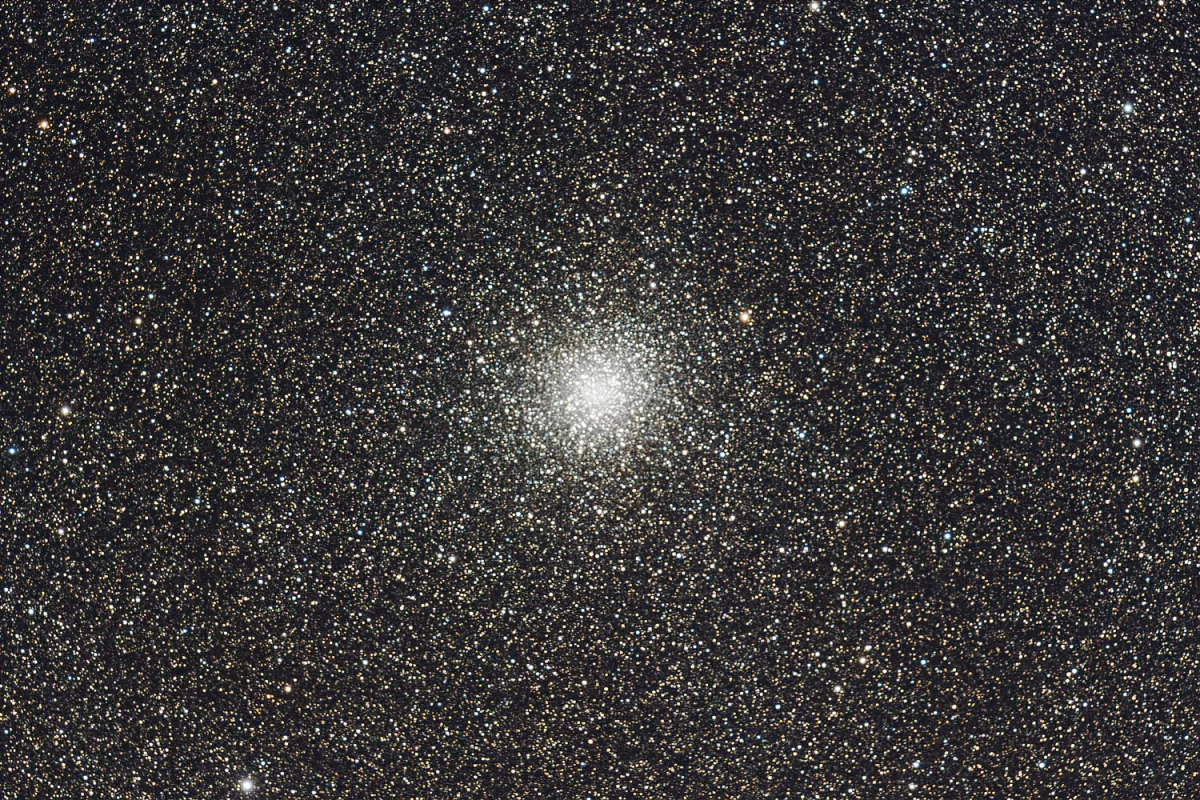
M4 is an easy target, right below Scorpion alpha and sigma, but is one of the splendid globular cluster

Going other side of sigma, we see M31, tight and dim


Thursday, June 16, 2016

My first astrophotographic attempt


After acquired AP1200 DMA, I decide to try to see how good it was. It was a little bit chill yesterday night, I setup my whole rag and wait for night.

Telescope: Meade SN10, f4.0, schmidt newton reflector.
Camera: Canon 350D
Mount: AP1200 DMA
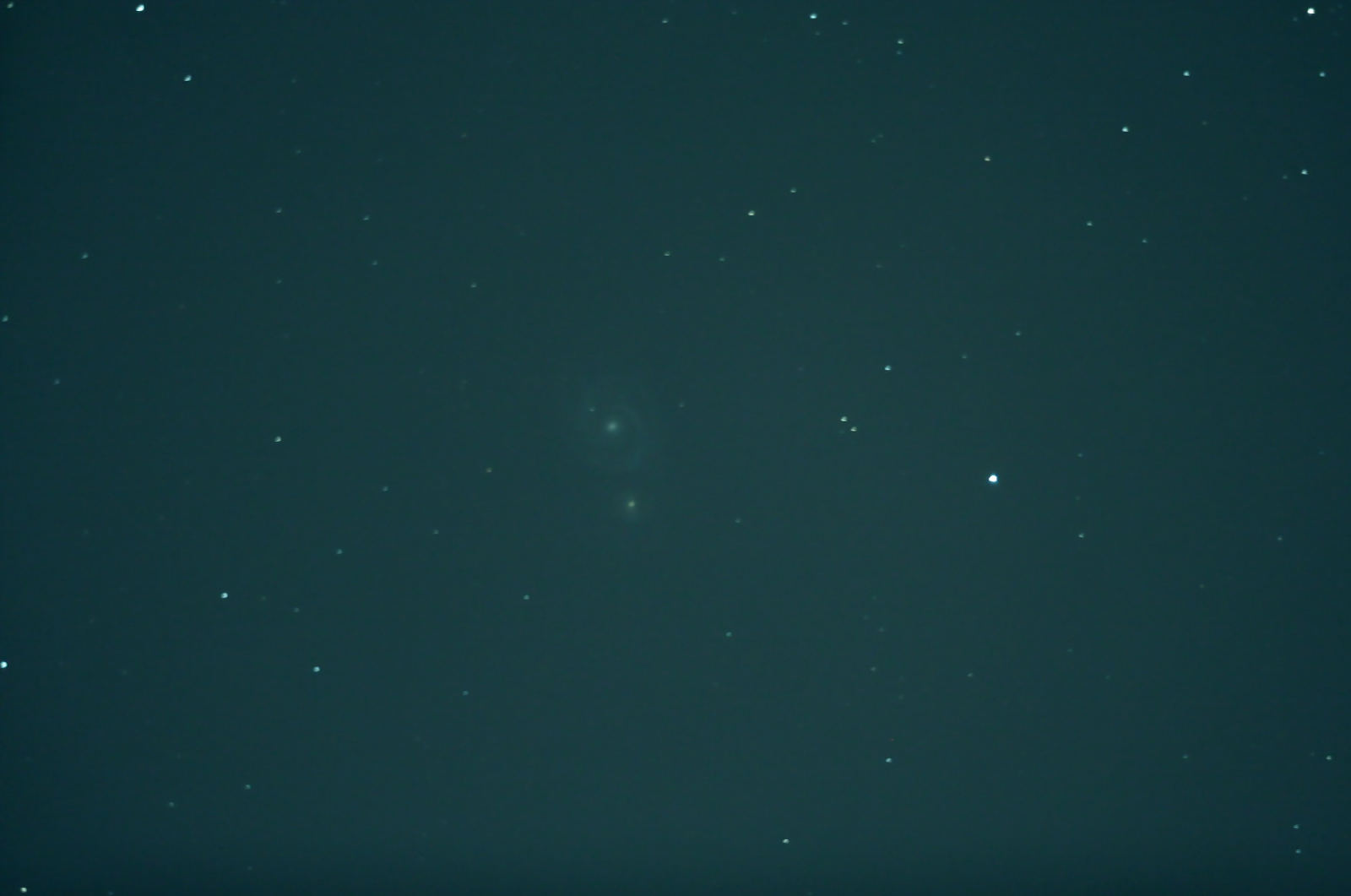
Target: whirlpool galaxy

Things I should do: prepare a focusing mask like bahtinov mask, choose a moonless night, better balance the mount.

Following is the 30 secs unguided photo


Sunday, October 4, 2015

My First Picture

I was planning to start my astrophotography hobby long time ago, there are lots of reasons for me to postpone, lack of time and equipment, wife not like it. etc. until this weekend ...

I happen to find a bargain of used AP 1200 equatorial mount, it has tracking problem. This weekend, my wife went with her women's group to santa cruz, so I can concentrate to fix my mount, it just need a new stepper motor driver chip!


The tracking is dead on! use 500x eye piece, the star is freeze for at least half hour. My first picture use Canon 350d is Epsilon Cygni, why it is so particular? because its Chinese name 天津,my home town

After Cygnus, constellation you can miss is Lyra, double-double is the one we definite want to picture

Thursday, June 5, 2014

Accurate Collimation for Newtonian Reflector

Collimate Newtonian telescope is easy when using the right tools, for me, astrosystem's light pipe is used to accurately square the focuser with secondary mirror. Kendrick laser is used to fast close the light path. and final touch on secondary is aided by autocollimator. The result is never seen before! Details of Mars are vivid, polar caps, dark brown region. all become clear at 450x!

Saturday, January 25, 2014

I see Sirius B tonight!

After I collimate my C14 as accurate as I can, I aim it at Sirius,  change eyepiece to nagler 7mm, I see a dim star locate east, about 10" from Sirius. It separate clearly. To eliminate possible ghost glare, I move out of focus slightly. it disappear, refocus, it get back. I am pretty sure it is Sirius-B!

Congratulate myself!

Thursday, May 30, 2013

Hunter's Two Dog

At begining of summer season, the Canes Venatici is close to zenith, it helps us to observe the deep sky objects within it. Canes Venatici has two major stars, a mag 3 star (Cor Caroli) and mag 4 star Chara

First object is M3, which is easy to locate around 40% from arcturus to cor caroli. It is completely resolved through my 16" with 7 mm EP, it is a globular contains yellow stars, like gold sand float in space.

Then M51 Wirlpool galaxy, is it generally use to test your star hopping ability, if you see anyone aiming at Alkaid at a star party, most of the time they are looking at M51, its spiral arms are sometime visible from silicon valley.

M63 Sunflower galaxy locates around 25% from Cor Caroli to Alkaid, look for a wedge arrangement in the area, M63 is 1.5 deg north from apex.

M94 is a bright, face on galaxy, look for a bright star 20% from Chara to Cor Caroli, center finder there, there are a cluster of stars perpendicular to the line connect alpha/beta on the edge of view circle, M94 is 1.5 deg east of the cluster.

M106 is a spiral galaxy that is devoured by a supermassive blackhole, most galaxy contains blackhole at center, our milky way contains a rather small blackhole (4 million sun) compare to Andromeda (200 million). God is merciful, or it is rather difficult for us!

Monday, May 20, 2013

Marvelous C14


I got a second hand Celestron 14" Schmidt Cassegrain telescope ($2,800) recently, I set it up during weekend, compare to my F4 newtonian reflector, it has much better contrast, the sky background is dark.

Use TV Panoptic 41mm, Saturn is beautiful, what surprise me is the dark background, I can easily pick out 9 mag stars, even better, NGC 5605 can be recognized with a little effort.

Conclusion: I have to praise Celestron engineers for their flag ship product - C14, it is the dream scope for light polluted sky.

Later on I did a little engineering to put sky commander digital setting circle and use parallel port to communicate with it. Now I can cruise through sky from my laptop, cool!

Tuesday, May 14, 2013

Queen's Hair

Coma Berenices is the only constellation named after a real person, queen of Eygpt, sacrifies her beatiful hair to goddess in return to her husband's safety return. The open cluster Mel 111, virgo galaxy cluster give add hint to her blonde hair.
Coma Berenices is near galaxy pole, so there are no star brighter than 4 mag, and lots of galaxies, include famous virgo cluster.
To observe most of the wonders, locate Gamma Com, point the finder scope at 40% from Denebola to Alkaid, the Mel 111 open cluster is easy to distinguish, focus on a binary star located as No. 4 from Gamma, then move east about 1deg. NGC 4565 is a side on spiral galaxy with dark absorbing line.
The alpha com is located 40% from arcturus to denebola, center the fiinder at a binary star less 1deg north- east. M53 will be in scope. Within my 16", 220x, M53 looks memorable, some granularity into the core.
About third from alpha to gamma, there is a 5 mag star, there is a 5 mag star, 35 comae, centered on it and look north-east about 1 deg, there is M64, the black eye galaxy, it has dark dust edge looks like a ladie's eye wear shade.
Compare to NGC 4565, M100 is a face on spiral galaxy, point the finder at 20% from denebola to arcturus, notice there are two array of 5-6 mag stars converging at about 90 deg in the finder scope, center the finder at intersection, M100 should be in the view, it is small and dimmer than M51, but is conceivable!

Friday, April 12, 2013

Lion's Den

Leo is a magnificant constellation for its meteor shower and closeness to equator, Regulus (alpha Leo) is about 1 degree north of equator.

NGC 2903 is a spiral galaxy close to the mouth, put Lambda Leo at center of finder, about 2/3 of the radius south, looking for a star of 7 mag (unique in the area), center finder there and look through ep. the elongated faint smudge of light at east south edge of ep should be it!

M105/NGC 3384/NGC 3389, draw a line connect Alpha and Theta, put the finder on the line around 40% of the distance from theta, looking for two stars, of 5.5 mag, vertically separated 3.5 deg, and center the finder in the middle of these two stars, M105 should be in ep!

M105 is round and easy to see, NGC 3384 is elliptical and darker, south east of them are three stars line up in ep, around the barycenter is NGC 3389, it is very dim and negligible!

Going south for anothe degree, M96 jumps into my ep, it is elliptical, about same magnitude as M105, continue going west while keep M96 in ep, M95 will be included, it is round, also same magnitude.

Leo Triplet refers M66/M65/NGC3628, put the finder on Chort (theta leo), there should a 5 mag star around south edge of finer, assume it is 6 o'clock, center finder around 7 o'clock, M65 should be in ep, hove around east, the leo triplet should be contained within one ep! M65/66 are elliptical, NGC3628 looks like cigar!

Thursday, April 11, 2013

Rose on Qilin Head

Orion is famous for its M42, where massive star formation occuring. Another this kind of area is orion's neighbor,  Monoceros (Qilin). A line between head and right should of orion, (Betelgeuse) and extending the line east, until see a 4.5 mag star (Epsilon Mon), center finder here! there should be a star cluster on north east edge of the finder (NGC 2244), center on the cluster and observe with low mag eyepiece (22 mm is the longest focal EP I can find, 41mm pan has two big exit pupil.), don't forget OIII filter. A foggy background is confirmed as the rosette nebula!

Tuesday, April 9, 2013

Gemini - Brothers

After we had all the excitement about the wonders of orion constellation, we move to Gemini, which is located north east, next to orion's right arm.

Castor is a visual binary, it is seperated nicely under 220x.
Eskimo (NGC 2392) and M35 open cluster are the enjoyables among my 16" in santa clara, to find Eskimo, we start from the torso star of the elder brother (delta), in the finder, there should be three bright stars (5 mag) north east ward, they are forming a 'L', move scopy among the upper part and start to scan within EP. Eskimo is a grey/bluish planetary nebula, enjoy!

M35 is near left foot of younger brother (eta Gem), center the finder on it, M35 is on the east edge of the finder, there are several dim nebulas within finder circle, IC443 is between eta and mu, IC444 is around north of eta, SH2-247, NGC 2174/2175 are in south area, they are just dim, requires 5-10 hours of exposure to capture

Wednesday, February 13, 2013

Crab Nebula

After working on my Newtonian Reflector Project for over half a year, I finally have my Telescope ready, it is a newtonian reflector, 16" of diameter, focal ratio f/4. The mirror is purchased used, but the quality is pretty good, 12th wave, Strehl ratio .96. So I decide to start my Messier marathon.

First goal, M1 crab nebula

The Crab Nebula is a supernova remnant. Embedded within it is a radio pulsar.
  • The supernova was observed in 1054 A.D. by Chinese
  • The supernova event was visible to the naked eye in the daytime; it was as bright as Venus.
  • The filaments in the nebula are seen to be expanding at 1000 km/sec.
  • The total mass of ejected material is about 0.1 solar masses.
  • The distance to the Crab Nebula is about 6500 light years.
  • The diameter of the remnant is 6 light years.
  • A pulsar was discovered in the center of the nebula in 1969.
  • The neutron star in the center of the Crab rotates 33 times per second.
  • Since it expands at speed of 600 miles in a sec., it grows 1 arcsec every five years, so during Messier time, it was more brighter! 
Sounds interesting, yesterday, I see its face!

How? First find Constellation Taurus, it is close to zenith in winter evening, the alpha (Aldebaran) is a orange star (ranging bull), the zeta star is at end of its left horn, it is above Orion's head, going north from zeta star about 2 degree is the M1 crab nebula.

The field angle with my telescope is about 1 degree, so I just need to do star hopping from zeta star.


The hopping path zeta tau -> 77308 -> 77293 -> 77269 -> M1.
Finally, this is what I saw in eyepiece


Wednesday, January 2, 2013

Introduction

When I consider your heavens,
    the work of your fingers,
the moon and the stars,
    which you have set in place,
what is mankind that you are mindful of them,
    human beings that you care for them?    - Psalms 8:3-4

Lift your eyes and look to the heavens:
Who created all these?
He who brings out the starry host one by one,
and calls them each by name.
Because of His great power and mighty strength,
not one of them is missing. - Isaiah 40:26
"Two things inspire me to awe: the starry heavens above and the moral universe within.” - Immanuel Kant, Critique of Pure Reason

Friday, July 8, 2011

天琴一夜游

明天是周六,无需早睡,架上我的C9.25,瞄准天琴座, 开始一夜游。
第一站,Vega(织女)
第二站,Epsilon Lyrae, Double-Double
第三站,Zeta Lyrae, Double
第四站,M57, 环状星云
第五站,M56, 星团